Auto Greasing System: The Smart Way to Enhance Machine Performance and Longevity
Introduction
In modern industries, machinery plays a critical role in ensuring productivity and efficiency. However, regular maintenance—especially proper lubrication—is essential to keep machines running smoothly. This is where an Auto Greasing System comes into play. Designed to automate lubrication, it reduces manual effort, minimizes downtime, and extends equipment life.
In this blog, we’ll explore what an auto greasing system is, how it works, its benefits, applications, and why it’s becoming a must-have solution across industries.
What is an Auto Greasing System?
An auto greasing system, also known as an automatic lubrication system, is a device that delivers controlled amounts of grease to various parts of machinery at regular intervals without manual intervention.
Instead of relying on human operators to apply grease periodically, the system ensures consistent lubrication, even during machine operation. This helps avoid both over-lubrication and under-lubrication—two common causes of equipment failure.
How Does an Auto Greasing System Work?
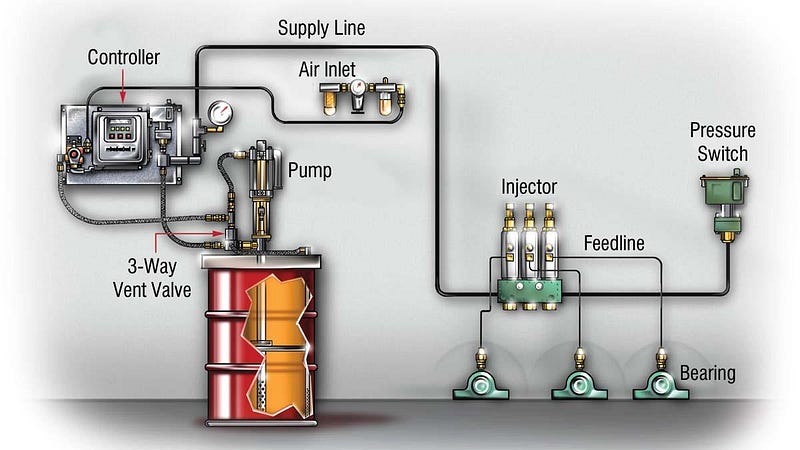
An auto greasing system typically consists of the following components:
- Grease Reservoir: Stores the lubricant
- Pump: Pushes grease through the system
- Controller/Timer: Regulates when and how much grease is applied
- Distribution Lines: Deliver grease to various lubrication points
- Injectors/Valves: Ensure precise delivery
Working Process
- The controller activates the pump at pre-set intervals
- Grease is pumped through distribution lines
- Injectors deliver exact amounts to specific machine parts
- The cycle repeats automatically
This continuous process ensures that all components receive proper lubrication without interrupting operations.
Types of Auto Greasing Systems
There are several types of automatic lubrication systems depending on application needs:
1. Single-Line Lubrication System
Ideal for small to medium machines, this system uses one main line to supply grease to multiple points.
2. Dual-Line Lubrication System
Best suited for large industrial setups, it alternates between two lines for efficient lubrication over long distances.
3. Progressive Lubrication System
Delivers grease in a sequence, ensuring each lubrication point receives a fixed amount.
4. Multi-Line Lubrication System
Each lubrication point has its own line, providing precise and independent grease supply.
Benefits of Auto Greasing Systems
1. Increased Equipment Life
Consistent lubrication reduces wear and tear, extending the lifespan of machinery components.
2. Reduced Maintenance Costs
Automated systems eliminate the need for frequent manual greasing, saving labor costs and reducing maintenance errors.
3. Improved Productivity
Machines can operate continuously without stopping for lubrication, leading to higher output.
4. Enhanced Safety
Minimizes the need for workers to access hazardous or hard-to-reach areas for manual greasing.
5. Optimal Lubrication
Prevents over-greasing and under-greasing, ensuring optimal performance.
Applications of Auto Greasing Systems
Auto greasing systems are widely used across various industries:
- Manufacturing Plants – Conveyor belts, motors, and bearings
- Construction Equipment – Excavators, loaders, and cranes
- Mining Industry – Heavy-duty machinery operating in harsh conditions
- Agriculture – Tractors and harvesting equipment
- Automotive Sector – Assembly lines and robotic systems
These systems are particularly valuable in environments where manual lubrication is difficult or inconsistent.
Why Choose an Auto Greasing System?
Manual lubrication often leads to inconsistent results due to human error, missed schedules, or improper grease quantity. An auto greasing system eliminates these issues by ensuring:
- Timely lubrication cycles
- Accurate grease delivery
- Reduced machine downtime
- Better operational efficiency
In the long run, investing in an auto greasing system can significantly improve your return on investment (ROI) by reducing repair costs and increasing machine reliability.
Maintenance Tips for Auto Greasing Systems
To ensure optimal performance, follow these maintenance practices:
- Regularly check grease levels in the reservoir
- Inspect distribution lines for leaks or blockages
- Ensure injectors are functioning properly
- Use the correct type of grease for your equipment
- Periodically test the system controller
Proper maintenance ensures the system continues to operate efficiently and effectively.
Conclusion
An auto greasing system is a game-changer for industries relying on heavy machinery. By automating lubrication, it enhances efficiency, reduces maintenance costs, and extends equipment life. Whether you're operating in manufacturing, construction, or agriculture, adopting this system can lead to significant operational improvements.
If you’re looking to boost productivity while minimizing downtime, investing in an auto greasing system is a smart and future-ready decision.
FAQs About Auto Greasing Systems
1. What is the main purpose of an auto greasing system?
The main purpose is to provide consistent and automatic lubrication to machine components, reducing wear and improving efficiency.
2. Can an auto greasing system be installed on existing machinery?
Yes, most systems can be retrofitted to existing equipment with minimal modifications.
3. How often does the system apply grease?
The frequency depends on the controller settings and machine requirements, ranging from minutes to hours.
4. Is an auto greasing system expensive?
While the initial investment may seem high, it significantly reduces maintenance and repair costs over time.
5. What type of grease is used in auto greasing systems?
The type of grease depends on the application, but it must be compatible with the system and machinery requirements.


Comments
Post a Comment